If you have been comparing tablecloths for parties, outdoor dining, or everyday use, you may have come across the term PEVA. This lightweight material is commonly used for table covers because it creates a smooth, moisture-resistant surface that is easy to wipe clean. But what exactly is PEVA, and how does a PEVA tablecloth compare with other materials? Here is what to know before choosing the right covering for your table.
What Does PEVA Mean?
PEVA stands for polyethylene vinyl acetate, a flexible plastic material made from polyethylene and vinyl acetate. It is commonly used in products that benefit from a lightweight, non-absorbent surface, including shower curtains, protective covers, and tablecloths. Unlike woven textiles, PEVA does not rely on fabric fibers to create its structure.

Because the material is flexible and resistant to moisture, PEVA works especially well in places where spills are likely. A PEVA table cover can therefore be useful for casual dining, children's parties, craft tables, picnics, and other settings where practicality matters more than the drape and texture of traditional fabric linens.
Is PEVA a Fabric or Plastic?
PEVA is considered a plastic material rather than a traditional fabric. Although terms such as "PEVA fabric" are sometimes used when describing table covers and similar products, the material does not have the woven or knitted construction typically associated with fabrics like polyester or cotton. Instead, PEVA creates a smooth surface that does not readily absorb liquids.
That distinction affects how the material looks and performs on a table. Fabric options such as polyester tablecloths have a softer drape and are often chosen for weddings, receptions, and banquet settings. PEVA tends to be more practical for casual occasions where protecting the table and simplifying cleanup are the main concerns.
What Is a PEVA Tablecloth?
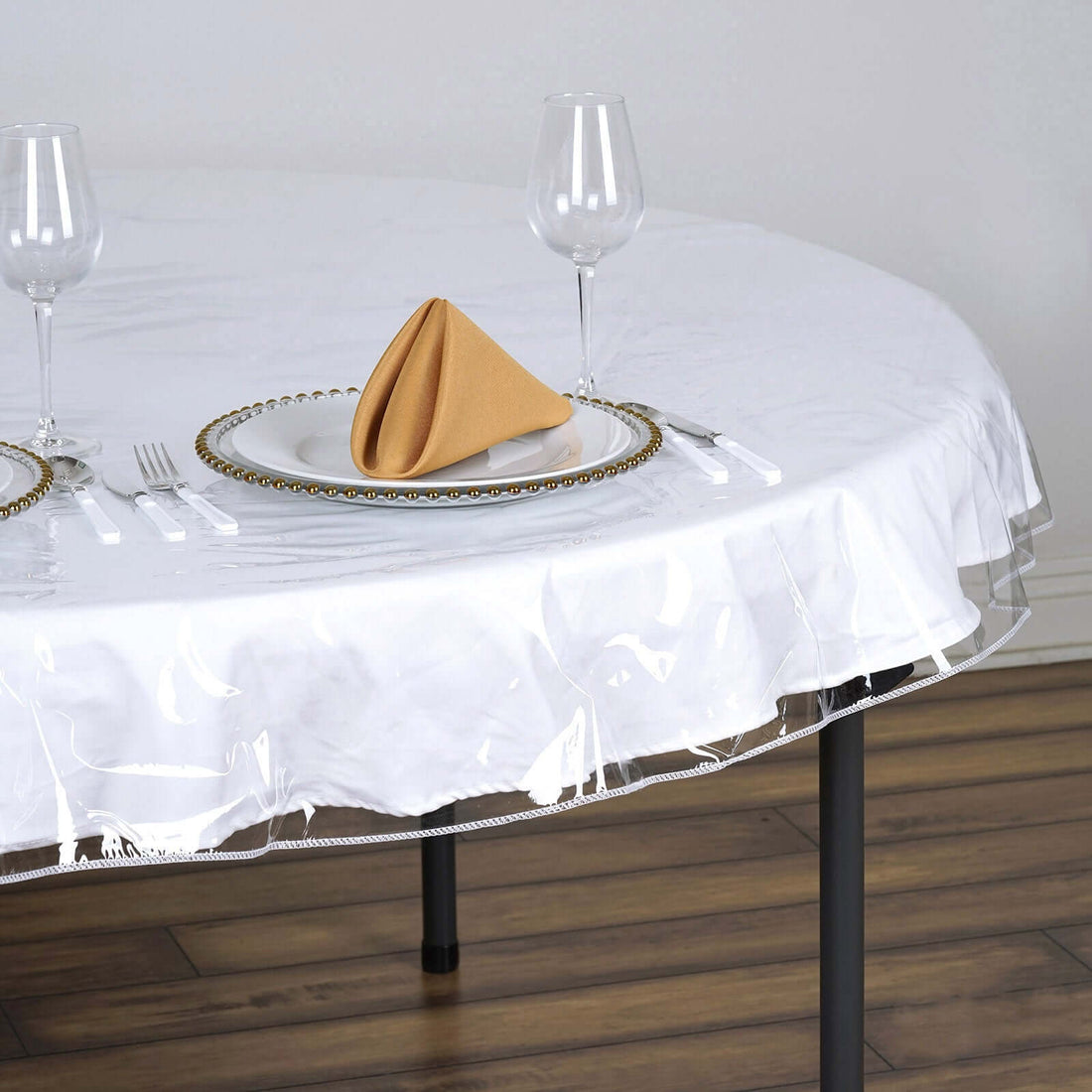
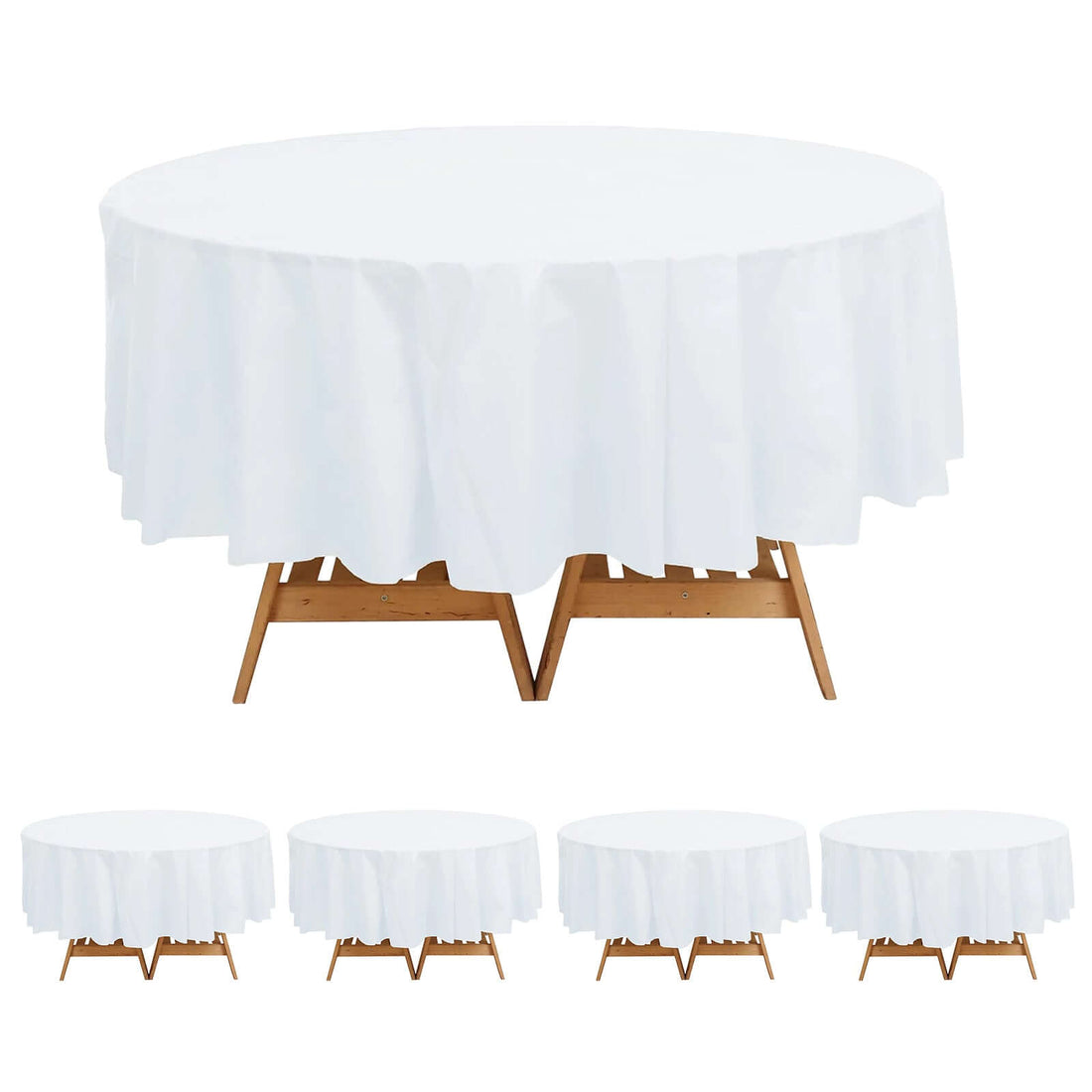
A PEVA tablecloth is a table covering made primarily from polyethylene vinyl acetate. It is typically lightweight, flexible, and designed to provide a protective barrier between the tabletop and food, drinks, or other potential messes. Because liquids remain on the surface instead of immediately soaking through, most everyday spills can simply be wiped away.
PEVA tablecloths are particularly convenient for birthday parties, family gatherings, outdoor meals, kids' tables, and temporary event setups. They can also be found in different shapes and sizes, so the same basic sizing considerations used when selecting round tablecloths or rectangular covers still apply: measure the tabletop and consider how much drop you want around the edges.
What Are the Benefits of PEVA Tablecloths?
One of the main advantages of PEVA is easy maintenance. Its non-absorbent surface makes everyday spills easier to manage than they would be on many untreated fabric tablecloths. The material is also lightweight, making it convenient to spread over a table, remove after an event, and store when appropriate. For gatherings where fast cleanup is important, disposable tablecloths offer another practical approach.
PEVA can also help protect the table underneath from food, drinks, paint, glue, and other common party messes. Whether a particular PEVA tablecloth is reusable depends on its thickness, construction, and care instructions, so it is best to check the manufacturer's recommendations rather than assume that every PEVA cover is designed for repeated use.
PEVA vs Vinyl Tablecloths: What's the Difference?

PEVA and PVC vinyl are different materials, although they are often compared because both can create flexible, easy-clean table coverings. PEVA uses polyethylene vinyl acetate, while PVC is polyvinyl chloride. In practical event use, both materials can provide a smooth surface that helps keep spills from reaching the table underneath.
The better choice often comes down to the individual product and how you plan to use it. PEVA can work well for lightweight casual coverings, while PVC options are also widely used for party and event tables. If quick cleanup is a priority, disposable plastic tablecloths are another option worth considering, particularly for birthdays, picnics, buffets, and other high-traffic gatherings.
Tablecloth Options for Different Event Needs
PEVA is useful, but it is only one of many table-covering materials available. For a more traditional reusable event linen, polyester offers versatility and a familiar fabric appearance, while satin tablecloths provide a smoother sheen for weddings and formal celebrations. For richer tablescapes, velvet tablecloths add texture, while sequin tablecloths are better suited to statement tables where sparkle is part of the design.
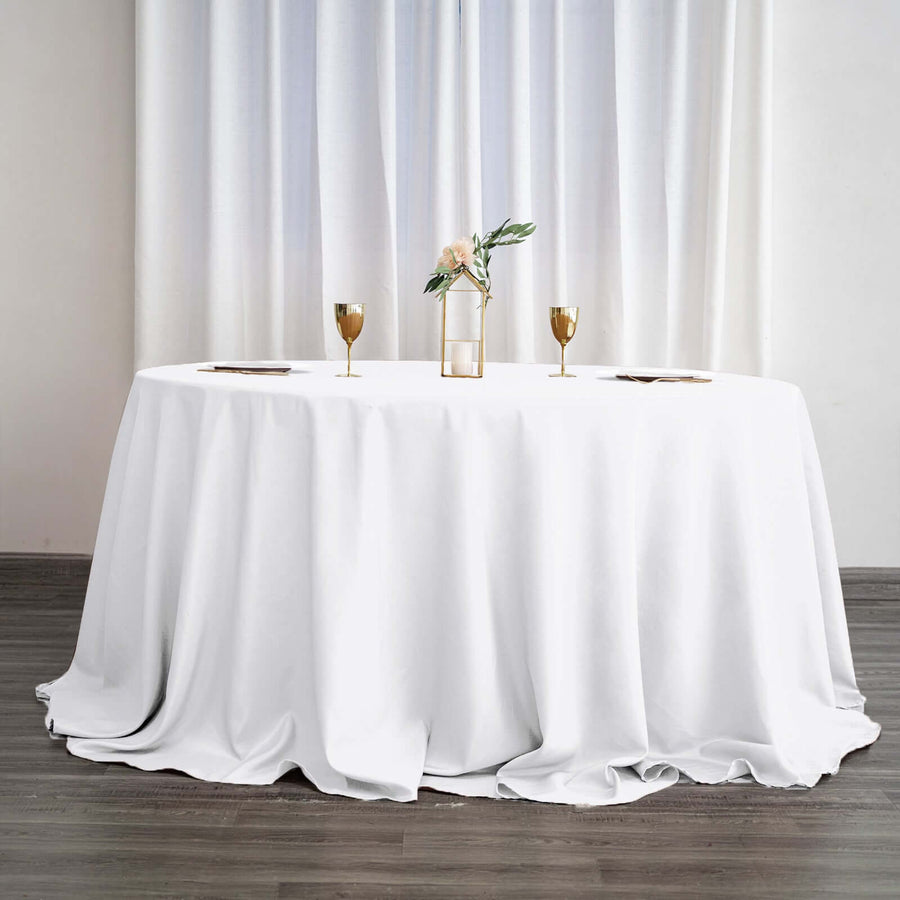
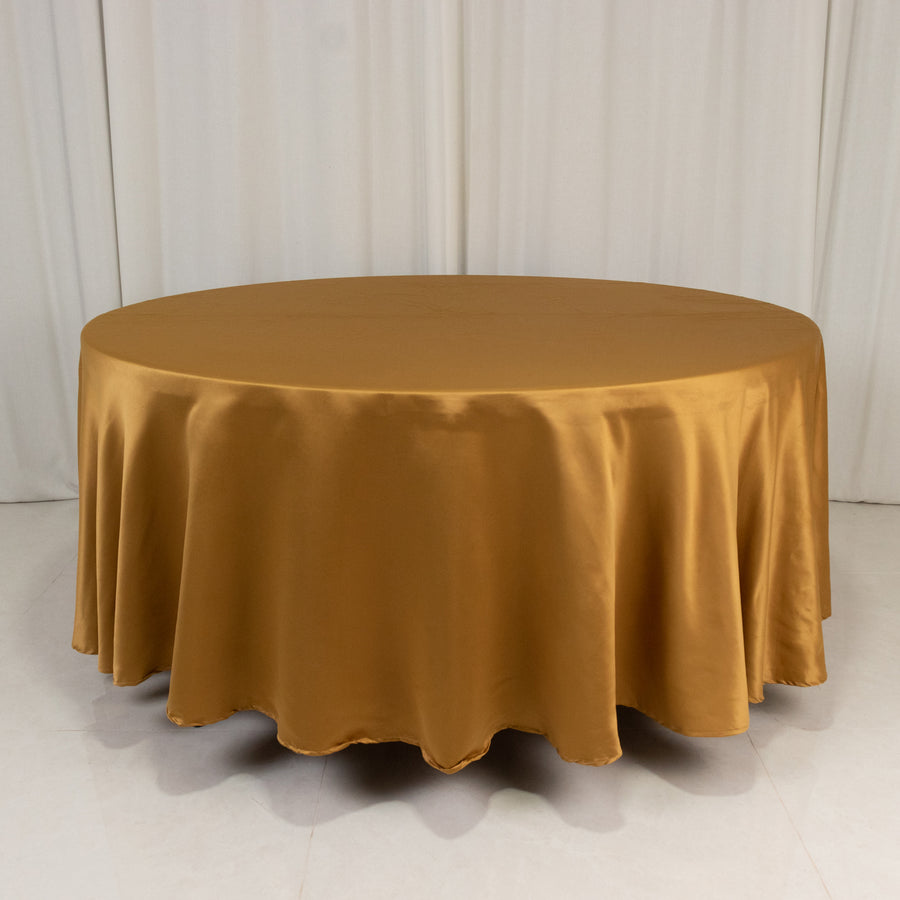
There are practical fabric choices as well. scuba tablecloths create a smooth, structured appearance, while spandex and fitted tablecloths are useful when you want the cover to stay closely fitted to the table. Instead of changing the entire tablecloth material, you can also layer table runners or table overlays over a simple base linen to introduce color, texture, or pattern.
How to Choose the Right Tablecloth Material
Start by considering how the table will actually be used. For casual meals, children's activities, outdoor gatherings, or other spill-prone setups, a PEVA, PVC, or disposable plastic cover can make cleanup easier. For weddings, banquets, and formal celebrations, fabric options usually provide the softer drape and more polished appearance expected from an event tablescape.
Also consider whether the tablecloth will be reused, how much maintenance you are comfortable with, and whether protection or appearance is the greater priority. There is no single material that works best for every occasion; choosing based on the setting will usually give you a better result than choosing based on material alone.
Choosing the Right Tablecloth for Your Event
A PEVA tablecloth is a practical choice when you want a lightweight, moisture-resistant surface that is simple to clean, especially for casual or messy occasions. For events where texture, drape, durability, or decorative impact matters more, polyester, satin, velvet, fitted, and other tablecloth styles give you plenty of alternatives, making it easier to match your table covering to both the function and look of your event.