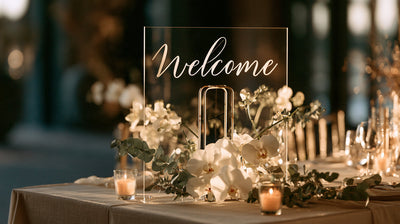
If your dining table looks a little plain for Christmas, try adding a christmas table runner. You can make one from fabric that goes with the decorations you already have, whether that's traditional red and green, something more neutral, or a pattern you've found at the fabric store.
And you don't need a sewing machine. We'll go through how to measure your table, choose the fabric, and make a runner using hemming tape instead of stitching. There are also a few ideas for decorating it once it's finished. If you pick a fabric you like and store it properly, you can bring it out again next Christmas.
What You'll Need to Make a Christmas Table Runner
Before buying your fabric, think about how you usually decorate your table for Christmas. Do you bring out the red and green decorations every year? Maybe you prefer burlap, greenery, and wooden accents. Or you might want something plain that you can use with different decorations. The fabric you choose will also affect how the runner hangs over the table edges.
Here's what you'll need for your diy christmas table runner:

-
Fabric in your chosen Christmas color or pattern
-
Measuring tape or ruler
-
Fabric scissors
-
Iron and ironing board
-
Iron-on hemming tape that works with your fabric
-
Fabric clips or pins
-
Optional decorative ribbons, lace trim, or other fabric decorations
If this is your first time making a runner, cotton or polyester would be a good place to start. They're fairly easy to work with and usually keep their shape. For a farmhouse-style Christmas table, you could try burlap or a linen-look fabric instead.
Satin and velvet are also options if you're dressing up the table for a formal Christmas dinner. Just be a little more careful when cutting and ironing them. Check the fabric's care instructions first, since some materials don't handle heat very well.
Not sure what size or fabric would look good on your table? Have a look at some ready-made table runners. You can compare the widths, colors, and textures before buying fabric for your own.
How to Measure Your Table for a Christmas Runner

Get your measuring tape and check the length of your dining table first. You'll need that number to work out how much fabric to buy. Most table runners hang a little over both ends, but that's up to you. If you'd rather keep the runner on top of the table, you can make it shorter.
For a runner that hangs over the edges, add about 6 to 12 inches on each end. As for the width, somewhere between 12 and 16 inches should work for most dining tables. You can go narrower if you want more of the table to show.
Here are some measurements to help you work out the length:
| Table Length | Suggested Finished Runner Length |
|---|---|
| 48 inches | 60–72 inches |
| 60 inches | 72–84 inches |
| 72 inches | 84–96 inches |
| 96 inches | 108–120 inches |
You don't have to follow these measurements exactly. For example, if you have a round dining table and only want the runner underneath your Christmas centerpiece, a shorter piece might look better.
One thing that's easy to forget is the extra fabric you'll need for folding the edges. Say you want your finished runner to measure 14 inches wide and 90 inches long. Cut your fabric to about 16 by 92 inches. That gives you enough material to fold each edge over half an inch twice, leaving a neat hem without making the runner smaller than you planned.
How to Make a Christmas Table Runner Without Sewing
For this easy christmas table runner, you won't need a sewing machine. We'll use iron-on hemming tape to hold the folded edges in place. Just check that your fabric can handle the heat from an iron before you start.

Step 1: Measure and Cut Your Fabric
Spread your fabric out on a clean, flat surface. Using the measurements you worked out earlier, mark where you need to cut. Don't forget the extra fabric for the hems.
Cut along the lines with fabric scissors. Take your time around the corners, and check that the edges are straight. It's easier to fix an uneven cut now than after you've started folding.
If your fabric has Christmas trees, snowflakes, or another printed design, check which way the pattern is facing before cutting. You don't want to finish the runner only to find that all the Christmas trees are upside down.
Step 2: Fold and Press the Edges
Flip the fabric over so the wrong side is facing up. Along one of the long edges, fold about half an inch of fabric inward and press it with your iron. Fold that same edge over another half inch and press again.
Do the other long edge, then work on the two shorter ends. At the corners, straighten out the folds and tuck in any loose fabric. Try not to leave too many layers piled up in one spot, or you'll end up with thick, uneven corners.
Check the ironing instructions for your fabric before applying heat. If you're using something delicate, test the iron on a small scrap first. A pressing cloth can also help protect fabrics that are sensitive to direct heat.
Step 3: Secure the Hems with Iron-On Tape
Now that you've folded the edges, it's time to secure them. Slip the hemming tape between the layers of fabric, making sure it stays inside the fold.
Check the instructions on the tape packaging before turning on your iron. Different brands may need different heat settings, pressing times, or moisture.
Press the iron down on one section at a time. Don't slide it back and forth like you would when ironing clothes. Keep going until you've worked around all four sides.
Let the runner cool before lifting the edges to check them. If you find a spot where the fabric hasn't stuck together, go over that section again, following the tape instructions.
Step 4: Add Your Christmas Decorations
You can stop here if you're happy with how the runner looks. But if the fabric seems a little plain, adding a few details around the ends can make a difference.
Try attaching a narrow satin ribbon in a different color. A red ribbon on an ivory runner, for example, would look nice for Christmas. If you're using burlap or linen-look fabric, you could add some lace or a small bow instead.
For decorations that need gluing, use an adhesive that's suitable for fabric and follow its instructions. Keep anything glued or attached away from spots where you'll be putting hot serving dishes.
I'd leave the middle of the runner fairly flat. Once you've got plates, serving bowls, and a Christmas centerpiece on the table, bulky decorations underneath can become a nuisance.
Step 5: Press and Style Your Finished Runner
If the fabric needs it, give your runner one last press to smooth out any wrinkles. Then spread it across the middle of your dining table and see how it looks.
Check how much fabric hangs over each end. If one side is longer, adjust it until both sides are about even. And if you've made the runner a little too long, try folding the ends underneath first. That way, you can see how much you want to trim before cutting anything.
That's your christmas table runner finished. Now you can bring out the candles, greenery, or whatever Christmas decorations you're planning to put on the table.
Choosing the Right Fabric for Your Christmas Table Runner
Not all fabrics will look or feel the same once they're laid across your table. Cotton is fairly easy to cut and fold, while burlap has a rougher texture that works nicely with rustic Christmas decorations. Satin and velvet look dressier, but you'll need to be more careful when ironing them.
Think about how you'll use the runner, too. If it's going on the dining table throughout December, you'll probably want something that's easy to wash.
| Fabric | What It Looks Like | When to Use It |
|---|---|---|
| Cotton | Soft, casual, easy to handle | Everyday Christmas meals |
| Polyester | Smooth, holds its shape, comes in different finishes | Family dinners and Christmas parties |
| Burlap | Rough texture with a natural look | Farmhouse-style Christmas tables |
| Satin | Smooth with a slight shine | Dressier Christmas dinners |
| Velvet | Soft, thick fabric with a rich texture | Formal winter table settings |
If you're making a rustic christmas table runner, try natural burlap with wooden chargers and a few sprigs of greenery. Add candles, and you've got most of the table decorations sorted. You can also look through these burlap and lace runners for ideas. A lace runner layered over plain burlap is another option if you like that combination.
For a more formal dinner, you might prefer satin or velvet. Try laying your finished runner over a plain tablecloth, especially if the dining table has marks or a finish that doesn't go with your Christmas colors. It also gives you a chance to play around with contrasting fabrics without adding more decorations.
How to Decorate Your Christmas Table Runner

Now that your runner is on the table, you can start adding the Christmas decorations. You don't need to cover the whole thing, though. Leave some of the fabric showing, especially if you've picked a pattern you really like.
If you're going with traditional Christmas colors, try adding some evergreen branches, gold ornaments, and white plates. A red christmas table runner would also look nice over an ivory tablecloth. You could put a few pinecones among the greenery or use gold candle holders if you already have some.
For something lighter, try a white or cream runner with silver decorations and frosted greenery. Or skip the usual Christmas prints altogether. A modern christmas table runner in dark green, champagne, or beige can work with decorations you already use throughout the year.
You can arrange a few tabletop centerpieces down the middle. Small ornaments, artificial greenery, and battery-operated candles are all worth trying. Just remember that you'll still need somewhere to put the food, especially if everyone will be sharing dishes at the table.
If you've got a long dining table, try making two or three smaller arrangements instead of one big centerpiece. Leave some space between them for serving bowls and plates. It'll also be easier for people sitting across from each other to have a conversation without a huge bunch of decorations in the way.
DIY or Ready-Made: Which Christmas Table Runner Should You Choose?
If you've got a table that's longer or wider than usual, making your own runner might be easier than trying to find one that fits. You can choose the exact fabric and color you want, and you won't have to settle for a runner that's a few inches too short.
But if you're getting several tables ready for a Christmas party, buying ready-made runners could save you a lot of work. Measuring, cutting, and hemming one runner is manageable. Doing the same thing for ten tables is another story. And if you don't already have fabric scissors, an iron, or somewhere to spread out the material, buying one might make more sense.
For example, eFavormart offers a natural burlap runner with white lace edges, a white faux burlap lace runner, and a red velvet table runner. Each measures 16 by 108 inches and can be styled with Christmas greenery, ribbons, and candles.
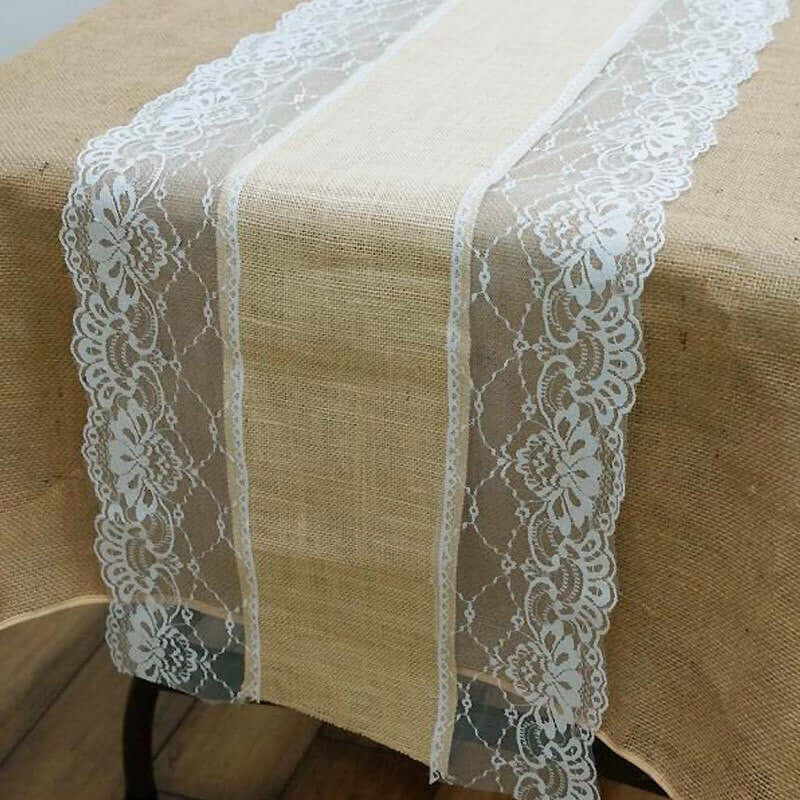


Whether you make one from scratch or decorate an existing runner, the important thing is choosing a size and material that work with your table.
How to Care for and Store Your Christmas Table Runner
Before throwing your runner in the wash, check what the fabric can handle. You'll also need to look at the instructions for the hemming tape, since washing or ironing it incorrectly could loosen the edges. If you've added lace, ribbons, or other decorations, you may be better off cleaning small stains by hand.
When Christmas is over, take off any ornaments or greenery you've added. Let the runner dry completely before putting it away. You can fold it loosely or roll it around a cardboard tube if you don't want too many creases.
Keep it somewhere clean and dry, out of direct sunlight. Next December, you can take it out, give it a quick press if needed, and use it again.
Make Your Christmas Table Feel More Personal
The nice thing about making your own christmas table runner is getting to choose exactly how you want it to look. Maybe you've found a Christmas fabric you really like, or you've got some leftover material from another project. You can turn that into something for your dining table without spending much on extra decorations.
Start with a plain runner if you've never made one before. You can always add ribbons or lace later if you feel like it. And if you decide you'd rather buy a finished runner instead, that's fine too. You'll still have plenty of ways to decorate the table for Christmas.