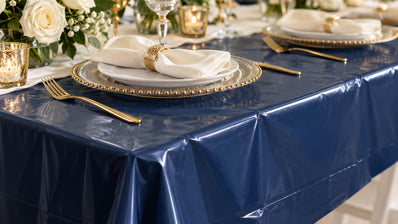
Plastic table covers are a practical choice for parties, birthdays, family gatherings, and outdoor celebrations. They protect tables from spills, simplify cleanup, and come in plenty of colors to suit different occasions. However, their thin material, visible creases, and loose edges can sometimes make a table setting look less polished than expected.
The good news is that making plastic table covers look nice does not require expensive decorations or complicated arrangements. A properly fitted cover, coordinated tableware, and a few thoughtful accents can turn an ordinary party table into an attractive setup.
Whether you're working with colorful or clear plastic tablecloths, these simple styling techniques will help you create a more coordinated table without sacrificing convenience.
How to Make Plastic Table Covers Look Nice
The secret to styling plastic table covers is to treat them as the foundation of your table setting rather than the main decoration. Start by getting the fit right, then introduce texture, color, and carefully chosen accessories to create a finished look.
Choose the Right Size and Fit

An oversized plastic table cover can leave bulky folds around the corners, while one that's too small may expose the table edges. Choosing the correct size helps the material hang more evenly and gives your setup a cleaner appearance.
For rectangular tables, measure the length and width, then allow enough material to hang over each side. A drop of approximately 6 to 10 inches often works well for casual party tables, depending on the seating arrangement. For round tables, choose a cover that provides an even drop around the entire circumference.
When browsing disposable plastic tablecloths, look for a shape and size that closely match your table. A solid-colored cover with a consistent overhang is often easier to style than one with excessive material gathering at the corners.
Remove Wrinkles and Creases
Plastic tablecloths are usually folded for packaging, which can leave visible lines across the surface. Although some creasing is unavoidable, a few simple steps can make the material appear smoother.
Unfold the cover several hours before your event and spread it flat across a clean surface. Gently smooth the material outward with your hands, allowing the folds to relax naturally. For reusable covers, follow the manufacturer's care instructions before attempting any additional wrinkle-removal methods.
Avoid placing a hot iron directly on plastic or using a hair dryer at high heat. Thin PVC and polyethylene materials can warp, shrink, or melt when exposed to excessive heat.
For a neater finish, arrange your table decorations only after the cover has been fully unfolded and positioned.
Secure the Edges for a Neater Finish
A table cover that constantly shifts or lifts at the corners can make even a carefully decorated table look untidy. This is especially noticeable at outdoor parties, where wind can move lightweight plastic.
Use tablecloth clips that fit your table's edge to keep the material in place. For indoor setups, smooth out any trapped air and make sure the overhang is balanced on all sides.
If your table has square corners, fold the excess material neatly underneath rather than allowing uneven bunches to hang down. Keep the covering clear of guests' knees and chairs so it doesn't get pulled out of position during the event.
Layer with Table Runners or Fabric Overlays

One of the easiest ways to make plastic table covers look more attractive is to add another layer. A table runner creates a focal point down the center of the table while breaking up the smooth, sometimes shiny appearance of plastic.
For example, a white runner over a navy blue cover creates a crisp contrast, while a champagne or beige runner can soften a darker base. Lightweight fabric runners add texture, while disposable table runners provide a convenient option when easy cleanup is a priority.
For round tables, try placing a square fabric overlay diagonally over the plastic cover. This introduces a decorative shape without hiding the entire base layer.
Keep the layering simple. One contrasting runner or overlay is usually enough to create visual interest without making the table feel cluttered.
Coordinate Colors with Your Party Theme

The color of your plastic table cover influences how the rest of your decorations appear. Rather than choosing accessories individually, begin with a simple palette of two or three complementary colors.
Here are a few combinations to consider:
| Plastic Table Cover | Coordinating Accents | Suitable Occasions |
|---|---|---|
| White | Gold, ivory, sage green | Bridal showers, weddings |
| Navy blue | White, silver, champagne | Birthdays, formal dinners |
| Blush pink | White, rose gold | Baby showers, birthdays |
| Black | Gold, cream | Graduation parties, evening events |
| Sage green | Ivory, beige, natural wood | Garden parties, spring gatherings |
If you're using patterned plastic covers, choose mostly solid-colored accessories to avoid competing prints. For plain covers, patterned napkins or a decorative runner can introduce interest without overwhelming the setup.
The goal is to make every element feel connected, from the table covering to the smallest place-setting details.
Add a Simple Table Centerpiece

A centerpiece draws attention toward the middle of the table, making the plastic covering less visually dominant. You don't need a large arrangement to achieve this effect. A small vase of flowers, greenery, or a cluster of decorative accents can provide enough detail.
For birthday parties, try a compact floral arrangement that matches the theme. For outdoor gatherings, greenery in a clear glass vase creates a fresh, relaxed appearance. You can also use artificial flowers to create arrangements that can be prepared ahead of time and reused.
Keep centerpieces low enough for guests to see one another across the table. If you're decorating a long rectangular table, consider two or three smaller arrangements rather than one oversized display.
Use Charger Plates and Coordinated Tableware

A well-arranged place setting can make an inexpensive table covering look more intentional. Instead of placing disposable plates directly onto the plastic, consider adding decorative charger plates beneath the dinnerware.
Gold-rimmed chargers complement navy, white, and blush table covers, while clear chargers work well with colorful or patterned designs. Decorative chargers can also help establish a consistent arrangement when paired with simple dinner plates.
Complete the arrangement with matching cutlery, cups, and neatly folded napkins. Even simple white dinnerware can look more polished when the surrounding accessories follow a consistent color scheme.
For casual parties, lightweight disposable tableware can work just as well. The key is consistency rather than using expensive materials.
Add Decorative Accents Without Overcrowding
Small finishing touches can make a noticeable difference, particularly when the table already has a runner and coordinated place settings.
Consider folding table napkins into simple rectangles or pockets beside each plate. Place cards can help organize seating, while a few small decorative pieces can reinforce the event theme.
For evening celebrations, flameless candles can provide soft lighting without the open flame associated with traditional candles. This is especially useful when working with heat-sensitive plastic table covers.
Avoid scattering too many small decorations across the table. Leave enough space for plates, glasses, serving dishes, and guests' belongings.
Tabletop Pieces for a More Polished Look
A plastic table cover provides a simple starting point, but the accessories layered over it can make the biggest visual difference. A contrasting runner adds texture, charger plates define each place setting, and coordinating napkins help bring the colors together. If you're recreating one of the styling techniques above, these tabletop essentials can help you achieve a more cohesive arrangement without adding too many decorations.


Choosing the Right Plastic Table Cover for Your Event
Not all plastic table covers create the same appearance. The material, thickness, transparency, and pattern can influence how your decorations look once everything is arranged.
Clear Plastic Table Covers
Clear plastic covers are useful when you want to protect a tabletop or decorative fabric without completely hiding what's underneath. They can work over patterned tablecloths, wooden surfaces, or decorative arrangements that deserve to remain visible.
For the neatest appearance, choose a transparent cover that fits the table closely. Smooth out trapped air and avoid placing bulky decorations underneath, which can create uneven surfaces.
Disposable Plastic Table Covers
Disposable covers are convenient for birthdays, family celebrations, picnics, and events where quick cleanup matters. They are available in solid colors and decorative patterns, making them adaptable to different party themes.
A solid white, navy, or sage green cover works well when you want to add your own decorative layers. Printed designs can also look attractive on their own, especially for themed celebrations.
When choosing a disposable cover, consider whether the event calls for a plain background or a more decorative pattern. Matching the covering to the occasion makes it easier to coordinate the remaining accessories.
Heavy-Duty Plastic Table Covers
Thicker plastic table covers can be a practical choice for gatherings where tables will see frequent use. Depending on the product, they may offer better resistance to minor tears and shifting than very thin disposable sheets.
For an attractive setup, look for a smooth finish and enough coverage to keep the edges even. Heavier covers can work particularly well for buffet tables, outdoor celebrations, and children's activity stations.
Remember that thickness alone does not determine appearance. Color, fit, and the surrounding decorations still play an important role.
Common Mistakes to Avoid When Styling Plastic Table Covers
Even a coordinated table can look unfinished when a few basic details are overlooked. Before guests arrive, check for these common styling mistakes:
-
Choosing the wrong size: Excessive overhang creates messy folds, while a cover that's too short exposes the table edges.
-
Ignoring wrinkles: Visible fold marks can distract from an otherwise carefully arranged table.
-
Mixing too many colors: Limit the palette to a few complementary shades for a cleaner appearance.
-
Overdecorating the center: Large arrangements and scattered accessories can leave little room for food and drinks.
-
Using open flames: Plastic coverings can melt or ignite when exposed to heat, so flameless lighting is a safer decorative choice.
-
Forgetting outdoor conditions: Lightweight covers can blow around unless properly secured.
A final check from different angles can help you spot uneven edges, misplaced decorations, or crowded place settings before the event begins.
Create a Beautiful Party Table with Simple Finishing Touches
Making plastic table covers look nice comes down to a few thoughtful choices. Start with a cover that fits properly, smooth out visible creases, and select colors that complement your event theme. From there, a simple runner, coordinated dinnerware, and a small centerpiece can transform the overall appearance without making the setup complicated.
You don't need to hide every inch of the plastic covering or fill the table with expensive accessories. Instead, focus on balance, practical placement, and details that make the arrangement feel intentional.
Whether you're decorating for a birthday, family gathering, or outdoor celebration, a well-styled plastic table cover can provide a clean, attractive foundation while keeping setup and cleanup manageable.