Chiffon fabric is a lightweight, sheer woven fabric known for its flowing drape and subtly textured surface. It can be made from silk, polyester, or other fibers and is used for dresses, scarves, wedding decorations, and layered accents. Its defining feature is the way it is constructed, rather than one particular material.
From flowing gowns to softly gathered chiffon table runners, chiffon brings movement and lightness to a design. Understanding its composition, texture, and limitations can help you choose the right version for clothing, craft projects, or event decor.
What Is Chiffon Fabric?
Chiffon is a sheer fabric made with a plain weave, where threads cross over and under one another. Traditional chiffon uses tightly twisted yarns that give the surface a subtle texture. The result is a thin, flexible material that falls into soft folds rather than holding a stiff shape.


Although chiffon often looks smooth from a distance, it can feel slightly grainy when handled. Its transparency also makes it useful for layering: an underlying color, lining, or surface can remain visible through the fabric.
For decorating, chiffon fabric bolts give you material to cut and arrange into custom accents. Before choosing a bolt, check its width, fiber content, and edge finish, since these details affect how it can be used.
| Feature | What to Expect |
|---|---|
| Appearance | Sheer, with a finish that may be matte or subtly lustrous |
| Weight | Generally lightweight |
| Texture | Fine and sometimes slightly grainy |
| Drape | Flowing, with soft folds |
| Composition | Can use natural, synthetic, or regenerated fibers |
| Coverage | Usually needs layering or a backing when opacity matters |
| Applications | Clothing, accessories, fabric accents, and event draping |
What Is Chiffon Fabric Made Of?
Chiffon is not automatically silk, and it is not another name for polyester. Both fibers can be used to make chiffon, along with options such as nylon, rayon, and cotton. The fiber influences the finished fabric’s feel, price, and care requirements, so two chiffon fabrics may behave differently even when they look similar.
Silk Chiffon
Silk chiffon is associated with fine garments, including flowing dresses, scarves, and delicate overlays. It combines a light drape with a natural luster, making it suitable for designs where movement and surface appearance matter. It generally costs more than polyester chiffon and requires careful handling.
Polyester Chiffon
Polyester chiffon offers a generally more affordable alternative to silk while retaining a sheer, flowing appearance. It is a practical option to consider for larger decorating projects, although its feel and finish vary between products. Check the specifications rather than assuming that every polyester chiffon fabric has the same weight or care instructions.
For example, a dual-layer chiffon backdrop pairs a chiffon top layer with a separate polyester backing. This construction combines a sheer decorative surface with added coverage, illustrating why the full product design matters as much as the fabric name.
Other Chiffon Fibers and Blends
Chiffon can also be made using rayon, nylon, cotton, or blended fibers. These versions may differ in softness, sheen, and movement. Cotton chiffon, for instance, can have a more matte appearance, while other fibers and finishes create different surface effects. Use the composition label and, when possible, a sample to judge whether a fabric suits your project.
How Is Chiffon Fabric Made?
Traditional chiffon is woven from yarns twisted in opposite directions, commonly called S-twist and Z-twist yarns. These tightly twisted threads are interlaced in a plain weave. Their twist creates slight puckering in the finished fabric, contributing to chiffon’s fine texture.
This construction helps explain why chiffon can appear delicate and smooth while feeling slightly textured. Its fine weave also allows light to pass through, giving it the transparency that makes it useful for overlays and decorative layers.
The weaving method does not make all chiffon identical. Fiber content, fabric weight, and finishing treatments can change the appearance and handling of the finished material. When comparing fabrics, look at an actual sample rather than relying on the word “chiffon” alone.
What Does Chiffon Look and Feel Like?

Chiffon has a sheer appearance, a fine, subtly textured surface, and a soft, flowing drape. Although it can look smooth from a distance, its twisted yarns may give it a slightly grainy feel. The exact softness and finish depend on the fibers used.
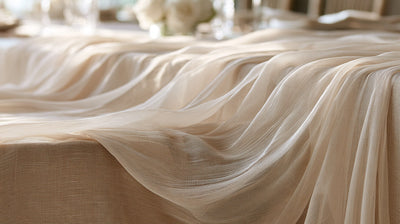
Its appearance also changes with layering. Spread flat, chiffon allows the surface behind it to show through, while gathered or overlapping folds create deeper color and more coverage. On a dining table, the shade of the underlying tablecloths becomes part of the finished look. Pale chiffon over light linen creates a subtle layer, while the same fabric over darker linen produces more contrast.
Chiffon falls into relaxed folds that move with a garment or soften the outline of a frame or table edge. Loosely gathering it emphasizes texture and movement, while pulling it flatter highlights transparency. Testing both arrangements can help you choose the right coverage and amount of fabric for your project.
Benefits and Limitations of Chiffon Fabric
Chiffon works well when you want a lightweight layer with flowing movement. However, its sheer appearance and delicate construction can become drawbacks when you need full coverage, a rigid shape, or fabric that tolerates rough handling.
| Benefit | Limitation to Consider |
|---|---|
| Falls into soft folds | Offers little structure for designs that need to hold their shape |
| Allows underlying colors to remain visible | A single layer usually does not provide full coverage |
| Adds texture through gathering and layering | Extra layers require more fabric and can change the finished color |
| Available in different fibers and finishes | Care requirements cannot be determined from the name alone |
| Suitable for flowing decorative accents | Fine fabric can be vulnerable to snagging and fraying |
Chiffon’s tendency to fray means cut edges may need finishing, while its delicate surface calls for care around rough fasteners and sharp objects. Ready-made pieces with finished edges can reduce preparation when you do not want to cut and sew fabric yourself.
If your goal is to conceal a wall or create a more opaque background, compare layered chiffon with solid-color backdrop curtains. Check each product’s material and coverage rather than choosing by color alone. Chiffon is most useful when its transparency and flowing folds contribute to the design.
What Is Chiffon Fabric Used For?

Chiffon is used in clothing, accessories, and decorations where a sheer layer or flowing drape suits the design. In fashion, it creates movement without a heavy appearance. For weddings and events, it softens backgrounds, adds texture to tables, and forms loosely gathered fabric accents.
Dresses, Blouses and Scarves
Chiffon is often used for dress overlays, flowing sleeves, blouses, and scarves. Its transparency allows designers to layer it over a lining or another fabric, while its light weight creates movement in skirts and loose silhouettes. The finished garment’s coverage depends on the chiffon itself and how it is lined or layered.
Wedding Backdrops and Arch Draping
Chiffon can soften the outline of a ceremony frame or form a flowing background behind a sweetheart table. For an asymmetrical arrangement, gather fabric at one upper corner and let it fall down the side. For a balanced look, use two lengths of wedding arch drapes arranged on either side of the frame. Check the material listed for each drape, since this collection includes different fabric options.
Transparency matters when decorating a backdrop. A single sheer layer may leave the wall or scenery visible, while additional layers provide more coverage. Before attaching panels to backdrop stands, check the dimensions, attachment method, and support requirements of both products.
Table Runners and Chair Accents
On tables, chiffon creates a soft line beneath centerpieces without completely hiding the linen underneath. Spread it relatively flat for a restrained look, or gather it loosely to create overlapping folds. Keep the fabric clear of place settings so guests have a stable surface for plates and glasses.
Chiffon also works as a chair accent when you want flowing tails rather than a stiff bow. Choose chiffon chair sashes with enough length for the intended arrangement, and test one on the actual chair before ordering for the whole event.
Ceiling Draping and Venue Decoration
Chiffon can form sweeping fabric lines above a reception space, helping define an area without creating a solid ceiling. The finished effect depends on the panel width, spacing, and depth of each hanging curve.
When selecting ceiling drapes, measure the intended route and allow additional length for the drop between attachment points. Confirm approved installation methods with the venue. If flame resistance is required, check the specific product’s documentation rather than assuming that all chiffon has that treatment.
Chiffon vs. Organza, Tulle and Georgette

Chiffon, organza, tulle, and georgette can all create lightweight layers, but their textures and draping qualities differ. When comparing chiffon vs tulle, the clearest distinction is the construction: chiffon has a fine woven surface, while tulle has visible netting. Chiffon generally falls into soft, flowing folds, whereas tulle can create airy volume, depending on its stiffness. Organza offers a crisper shape, while georgette typically has more texture and body than chiffon.
| Fabric | Typical Appearance and Texture | Drape or Structure | Suitable Applications |
|---|---|---|---|
| Chiffon | Sheer, fine, subtly textured | Soft and flowing | Dress overlays, scarves, gathered runners, draping |
| Organza | Sheer, crisp, often lustrous | Holds shape more readily | Structured bows, decorative overlays, volume |
| Tulle | Open net with visible mesh | Varies from soft to stiff | Veils, layered skirts, gathered accents |
| Georgette | Usually more textured and less transparent than chiffon | Flowing, with more body | Dresses, blouses, scarves |
These are general comparisons. Fiber content, weight, and finish can change how each fabric behaves, so samples are useful when coordinating several materials.
Choose chiffon when you want relaxed folds and movement. Consider organza when the design needs a more defined shape, or tulle when visible netting and gathered volume are part of the look. Georgette can be an alternative for clothing projects that need flowing fabric with more texture.
How to Choose Chiffon for Your Project

Start with the effect you want to achieve, then check the specifications needed to produce it. A fabric suitable for a narrow table accent may not provide enough width for a backdrop, even if both products are described as chiffon.
-
Check Fiber Content and Coverage
Read the composition details before comparing price or care requirements. Silk chiffon and polyester chiffon can offer different handling and maintenance needs.
Next, decide whether transparency helps your design. For a decorative overlay, sheer coverage may be ideal. To conceal an unattractive background, you may need multiple layers or a separate opaque backing. Test the fabric against the actual background whenever possible.
-
Measure Width, Length and Fullness
Measure the area you want to decorate, including overhangs, hanging curves, and gathered sections. Fabric pulled straight across a frame requires less length than fabric arranged into deep swags.
Width is equally important. A narrow bolt can work for accents but will require several strips to cover a broad area. For curtains, allow extra panel width if you want visible folds rather than a flat sheet. Sketching the arrangement first helps you estimate fabric more accurately.
-
Compare Fabric Bolts With Ready-Made Pieces
Fabric bolts give you flexibility to cut custom lengths, but the edges may need finishing. Ready-made runners, sashes, and drapes reduce preparation when their dimensions already suit the project.
For a prepared backdrop panel, a 10ft white chiffon backdrop curtain offers a dual-layer design with rod pockets. Check the listed measurements against your frame and the amount of gathering you want before choosing a size.
-
Test Color in the Intended Setting
Sheer fabric takes on some of the appearance of the surface behind it. A pale chiffon accent may look different over white linen, dark wood, or a colored backdrop. Overlapping folds can also make the shade appear deeper.
If matching color is important, compare a sample with the other fabrics under lighting similar to the event space. This is particularly useful when combining several close shades, such as white, ivory, and champagne.
How to Wash, Steam and Store Chiffon
Always follow the care instructions supplied with the fabric or finished product. “Chiffon” alone does not tell you whether an item can be machine washed, steamed, or dry cleaned. Fiber content, dyes, trims, and special finishes all affect the appropriate method.
Washing Chiffon
If the instructions permit hand washing, use the recommended water temperature and detergent, and handle the material gently. Avoid vigorous rubbing or twisting. Machine wash only when the product instructions explicitly allow it, using the specified cycle and protection.
Do not transfer care instructions from one chiffon product to another. For example, a manufacturer may specify hand washing for a particular polyester chiffon even though other polyester fabrics tolerate machine washing.
Removing Creases
Check whether ironing or steaming is permitted before applying heat. Use the recommended setting and test an inconspicuous area first. Avoid assuming that the fabric can tolerate a standard cotton setting simply because it is being used for event decor.
When preparing several panels, work on one first and inspect the result before treating the rest. Allow the fabric to dry fully before packing it.
Storing Between Uses
Store chiffon clean and dry, away from sharp accessories or rough surfaces that could catch the fabric. Fold it loosely or hang it where practical, and avoid compressing it beneath heavy items.
Keep clips, pins, and installation hardware in a separate container. Labeling drapes by size can also reduce unnecessary unfolding and handling before the next setup.
Frequently Asked Questions About Chiffon Fabric
Is Chiffon Fabric See-Through?
Chiffon is generally sheer, although the amount of transparency varies by weight, color, and construction. Clothing may need a lining, while decorative projects may need overlapping layers or an opaque backing when coverage matters.
Is Chiffon Stretchy?
Traditional woven chiffon may have slight give, particularly on the bias, but it should not be treated as an elastic fabric. Products specifically described as stretch chiffon may contain stretch fibers. Check the composition and stretch specifications before choosing it for a fitted project.
Does Chiffon Wrinkle Easily?
Chiffon can develop creases during packing and storage. How readily it wrinkles, and how those creases should be removed, depends on its fibers and finish. Follow the product’s care instructions rather than assuming that every chiffon item is wrinkle resistant.
Is Chiffon the Same as Polyester?
No. Chiffon describes a type of fabric, while polyester is a fiber that can be used to make it. Chiffon can also be made from silk and other fibers, and polyester can be used in many fabrics besides chiffon.
Can Chiffon Be Used for Outdoor Wedding Decor?
Chiffon can be used outdoors when the product and installation suit the setting. Its light weight means it can move in wind, so test the arrangement and secure it using appropriate attachment points. Plan for changing weather and keep loose fabric away from walkways and open flames.
Choosing Chiffon for Your Event
Chiffon works best when its transparency, soft folds, and movement are part of the intended design. Match the fabric’s composition, dimensions, and coverage to your project, then check its care and installation requirements. Whether you are planning a table accent or layered draping, choosing the right piece of fabric makes the finished arrangement easier to prepare and maintain.