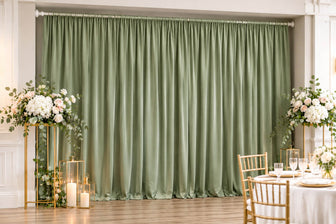
You don't necessarily need a backdrop stand to set up a photo booth or decorate a wall for a party. In many cases, you can work with what's already available at home or at the venue.
If you're looking for how to hang a backdrop without a stand, removable adhesive hooks, mounting strips, curtain rods, and tension rods are all worth considering. Before choosing a method, check how heavy your backdrop is and whether you're allowed to attach anything to the walls.
Here are eight ways to hang a backdrop, whether you're decorating for a birthday party at home or setting up for a wedding in a rented venue.
Essential Tools and Materials for Hanging a Backdrop
Before working out how to hang a backdrop, check what you're hanging and where it's going. A thin chiffon curtain won't need nearly as much support as a heavy velvet drape or a panel covered in artificial flowers.
You may need a few of the following, depending on how you plan to hang it:
- Removable adhesive hooks
- Curtain rods or tension rods
- Fabric clips or spring clamps
- Removable mounting strips
- Magnetic hooks
- Cord or hanging wire
- Measuring tape and a spirit level
- A suitable step ladder
Measure the area you want to cover, both across and from top to bottom. Check how much the backdrop weighs, too. Hooks, rods, and mounting strips all have weight limits.
If you've hired a venue, speak to the management before attaching anything. Even removable adhesive hooks may not be allowed, particularly on painted walls or wallpaper. Some venues won't let you attach anything to the ceiling either.
If you haven't bought your backdrop drapes yet, check what mounting options are available at the venue first. It's easier to choose a suitable fabric than to figure out how to support a heavy backdrop on the day of the event.
8 Ways to Hang a Backdrop Without a Stand
You may already have somewhere to hang your backdrop without realizing it. Depending on the room and the type of backdrop you're using, one of these eight methods should work.
1. Use Removable Adhesive Hooks

If you're working with a lightweight fabric backdrop, removable adhesive hooks are worth trying. They're particularly handy when you can't drill holes in the wall.
Start by cleaning the wall as directed on the hook packaging. Measure the distance between the hooks and mark their positions so they're level. Once you've attached them, wait for the recommended bonding time before hanging the fabric.
If your backdrop has hanging loops, slip them over the hooks. Otherwise, use fabric clips that can hold the material securely.
This works well for thin curtains, paper decorations, and small photo backdrops. For heavy velvet drapes or several layers of fabric, you'll need something that can support more weight.
2. Hang It From an Existing Curtain Rod

Have a curtain rod in the room you're decorating? You could use it to hang your backdrop instead of setting up a separate stand.
Take down the existing curtains if they're in the way. If your backdrop has a rod pocket, slide the rod through it just as you would with a regular curtain. Curtain rings with clips will work for fabric without a pocket.
Spread the fabric across the rod and adjust the folds. If you want a gathered look, leave a little extra fabric rather than stretching it flat.
Decorative curtains with built-in rod pockets are particularly easy to hang this way. You could even set up a dessert table or gift station in front of an existing window and use the curtains as your background.
Just check how much weight the rod and its brackets can hold, especially if you're planning to hang more than one layer of fabric.
3. Install a Tension Rod

A tension rod works well inside a doorway, recessed window, or alcove. It holds itself between two opposing surfaces, so there's no need to drill holes or install brackets.
Measure the opening before buying a rod. If your backdrop has a rod pocket, slide the fabric onto the rod before fitting it into place. Follow the installation instructions and spread the fabric across the opening.
This is a handy option for birthday parties at home or small photography setups. Lightweight chiffon fabrics are particularly suitable if you want loose, flowing folds.
Check the rod's weight limit before adding more fabric. You'll also need a firm surface at either end for the rod to hold against.
4. Use Removable Mounting Strips

If you'd rather have a backdrop that sits flat against the wall, removable mounting strips may be a better choice than hooks.
They're useful for lightweight paper backdrops, cardstock, and certain decorative panels. Follow the instructions on the packaging and check the position of your backdrop before pressing it against the wall.
Fabric can be a little trickier. Regular mounting strips don't always stick well to woven materials, so look for ones specifically made for fabric.
The condition of the wall matters, too. Smooth surfaces are generally easier to work with. Be careful with wallpaper, textured plaster, and freshly painted walls, as removing the strips could damage the finish.
5. Hang It From Ceiling Hooks

If the venue already has ceiling hooks or designated hanging points, you could suspend your backdrop from above instead of attaching it to a wall.
Check that the hooks are approved by the venue and rated to support the weight of your fabric. Use suitable hanging hardware, then adjust the material until it hangs evenly.
Long curtains look particularly good behind a sweetheart table or wedding ceremony area. You can let the fabric fall straight toward the floor or gather it into loose folds.
If you're trying to figure out how to hang a backdrop without a stand at a wedding venue, ask the coordinator about ceiling mounting before buying your hanging accessories. The venue may already have an approved system in place.
Don't use sprinkler pipes, light fixtures, or suspended ceiling tiles as hanging points. These aren't designed to support the weight of a backdrop.
6. Use Magnetic Hooks on Metal Surfaces

Magnetic hooks are an option if you're working somewhere with exposed steel. A photography studio or a converted warehouse, for example, may have metal frames in just the right spot.
Spread the hooks across the frame and hang the fabric from them using loops or clips. If the fabric dips in the middle, add another hook or two.
It's worth testing the surface beforehand. Some metals won't hold a magnet at all. Also, a hook attached to the side of a beam may not hold as much weight as one attached underneath it. Check the weight rating for the position you're using.
7. Secure Your Backdrop With Clamps

You can hang a backdrop from an existing rail or fixed frame using a few clamps.
Start at the corners and clip the rest of the fabric into place as you go. Padded clamps are preferable if you're working with delicate fabric or a painted frame that you don't want to scratch.
Clamps are particularly useful if you're setting up a photo booth with several backgrounds. Changing the fabric takes little effort, and you won't have to take the whole setup apart between photos.
Just make sure the clamps and the structure they're attached to can handle the weight.
8. Use an Existing Frame or Structure

Look around the venue. Is there a pergola in the garden? A fixed frame near the reception area? You might already have somewhere to hang your backdrop.
For an outdoor wedding, you could tie chiffon curtains to a sturdy wooden pergola using suitable fabric ties. Inside, an approved beam or decorative frame could serve the same purpose behind a cake table or photo booth. Use secure attachments that won't damage the structure.
When working out how to hang a backdrop without a stand outdoors, pay attention to the wind. Chiffon may weigh very little, but a wide piece of it can pull surprisingly hard against its fastenings. If it's particularly windy, leave the larger fabric panels down.
Backdrop Styles That Are Easy to Hang Without a Stand
Some backdrops are much easier to hang than others. A lightweight curtain with a built-in rod pocket, for instance, can go straight onto an existing curtain rod without any extra clips.
Sheer chiffon works well behind a wedding ceremony area or sweetheart table if you want the fabric to fall in soft folds. If the wall behind your display isn't particularly attractive, polyester curtains offer better coverage.
Sequin curtains are worth considering for birthday parties, evening receptions, and photo booths. They catch the light nicely, but the sequins can add quite a bit of weight to the fabric. Keep that in mind when choosing your hooks or other hanging accessories.
You can browse eFavormart's backdrops and drapery collection to see the different fabrics, sizes, and hanging styles available.


Before ordering a backdrop, check how the top edge is finished. Does it have a rod pocket? Are there loops for hooks or reinforced edges for clips? These details are worth checking, especially if you won't be using a backdrop stand.
Best Hanging Methods for Different Backdrop Materials
You wouldn't hang a paper backdrop the same way you'd hang a heavy velvet curtain. Some materials are light enough for removable hooks or mounting strips, while heavier decorative panels need a sturdier support.
The table below shows which hanging methods are suitable for different backdrop materials.
| Backdrop Material | Recommended Hanging Method | Main Consideration |
|---|---|---|
| Sheer chiffon | Curtain rod or rated adhesive hooks | Lightweight but may need layering for coverage |
| Polyester | Curtain rod or suitable clamps | Verify fabric weight and rod capacity |
| Sequin fabric | Secure curtain rod or rated clamps | Embellishments add weight |
| Paper backdrop | Compatible removable mounting strips or clips | Can tear under tension |
| Foil fringe | Suitable removable adhesive or hooks | Keep away from strong airflow |
| Velvet | Securely installed curtain rod or rated structural support | Heavier fabric requires stronger mounting |
| Artificial flower panels | Rated wall mounting system or existing frame | Panel weight and secure attachment |
For larger spaces, decorative room divider curtains can help hide bare walls or separate the dining area from the rest of the venue. Check the product's dimensions and weight to determine what you'll need to hang it securely.
Common Backdrop Hanging Mistakes to Avoid
Even if you already know how to hang a backdrop, it's easy to overlook these details when decorating for an event.
Underestimating the weight. Take into account the weight of the entire display, including extra layers of fabric and accessories.
Using adhesives on the wrong surfaces. Textured walls, wallpaper, and fresh paint can be problematic. Read the packaging before sticking anything to the wall.
Leaving large gaps between hooks. This is often why curtains droop in the middle. Wider backdrops generally need more points of support.
Overlooking creases. Unpack your curtains a day or two before the event. Remove any fold marks according to the fabric's care instructions, especially if the backdrop will be used for photos.
Hanging everything from the same support. Flowers, balloons, and lights can put extra strain on hooks and curtain rods. Larger decorations may need separate mounting points.
Rushing the setup. Some adhesive hooks need time to bond before they're ready to hold weight. Allow for this when planning your decorating schedule.
For particularly heavy or oversized backdrops, you may be better off using a dedicated support system. There's only so much weight an ordinary curtain rod or removable hook can safely hold.
Frequently Asked Questions
How to Hang a Backdrop on a Wall?
Use removable adhesive hooks or compatible mounting strips for lightweight backdrops on suitable wall surfaces. For heavier fabrics, use securely installed brackets or an existing curtain rod rated for the load.
Measure the wall first and distribute the attachment points evenly to prevent sagging.
How to Hang a Photo Backdrop Without a Stand?
An existing curtain rod, tension rod, or securely mounted horizontal rail can support a lightweight photo backdrop. Use suitable clips to hold the fabric in place and adjust it until the background appears smooth.
If you're photographing people or products, leave enough space between the subject and the backdrop to reduce unwanted shadows.
Can You Hang a Backdrop Without Damaging the Wall?
Yes, although the results depend on the wall finish and hanging method. Removable hooks, tension rods, and existing curtain rods can reduce the need for permanent fixtures.
Follow the manufacturer's installation and removal instructions, especially when working with painted walls or rented venues.
Can You Use Tape to Hang a Backdrop?
Suitable removable tape may work for small paper or foil backdrops on compatible surfaces. However, ordinary tape isn't a reliable option for heavy fabric curtains, velvet, or large sequin backdrops.
Use mounting products designed for the weight and surface involved.
How Do You Keep a Backdrop From Falling?
Choose mounting hardware rated for the total weight of the backdrop and its accessories. Distribute the load across suitable attachment points and check that the supporting surface is stable.
Test your setup before guests arrive, and avoid using an improvised hanging method when the available support is inadequate.
Create a Beautiful Backdrop Without a Stand
Once you know how to hang a backdrop without a stand, decorating a small room or rented venue becomes much easier. You might already have a curtain rod in the right spot, or a few removable hooks may be enough to hang a lightweight curtain.
Work with the space you have and choose your fabric accordingly. Browse eFavormart's event backdrop curtains for different colors, fabrics, and sizes that suit your event and available hanging points.